Refrigeration System Inspection
ON-VEHICLE INSPECTION1. INSPECT REFRIGERANT VOLUME
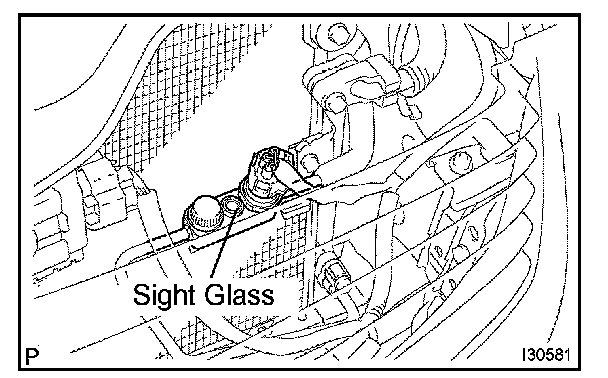
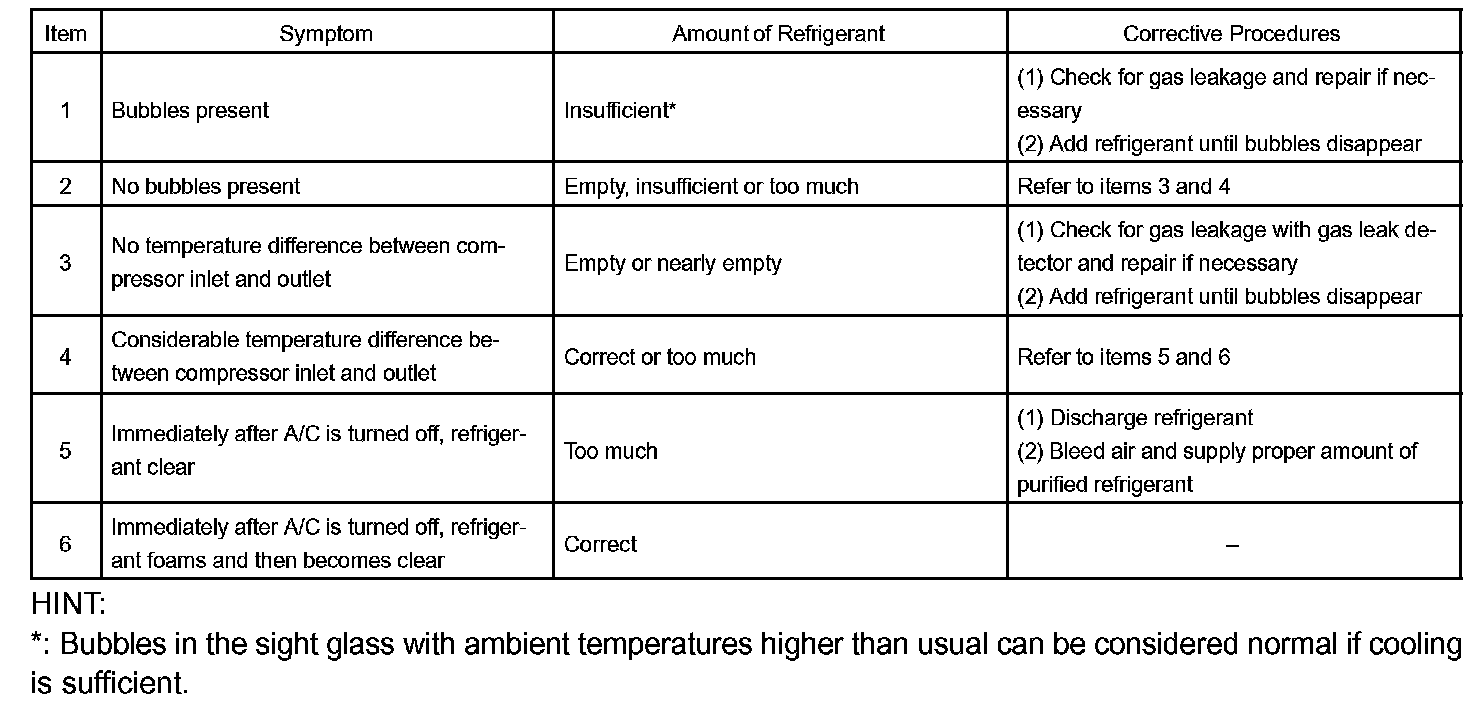
a. Observe the sight glass on the liquid tube.
Test conditions:
- Engine has been warmed up.
- All doors are fully open.
- A/C switch is turned ON.
- Engine is running at 1,500 rpm.
- Air inlet mode selector damper is on recirculation.
- Heater control knob is at MAX. COLD.
- Blower speed control switch is at HI.
- Temperature at the air inlet is 30 to 35°C (86 to 95°F).
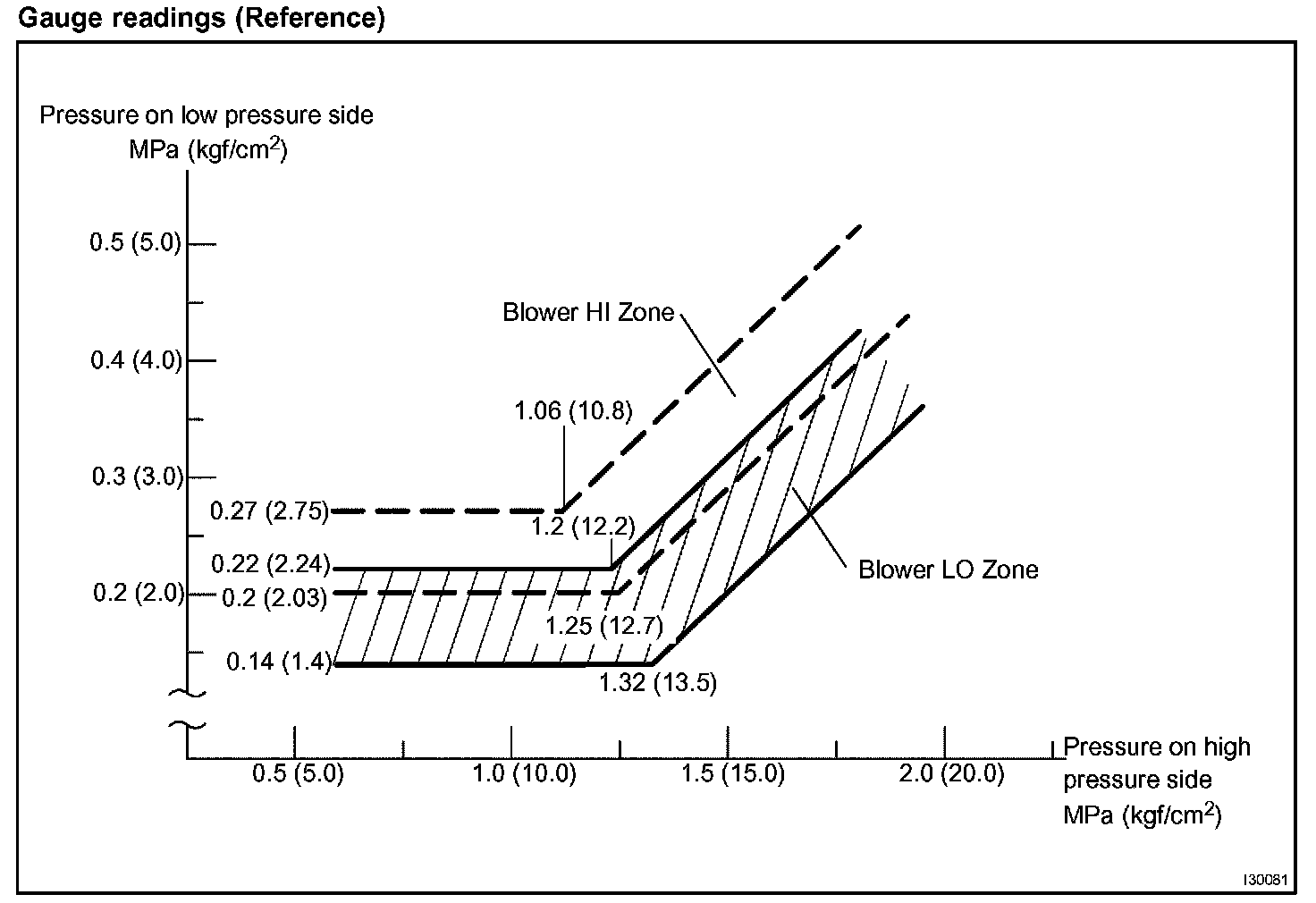
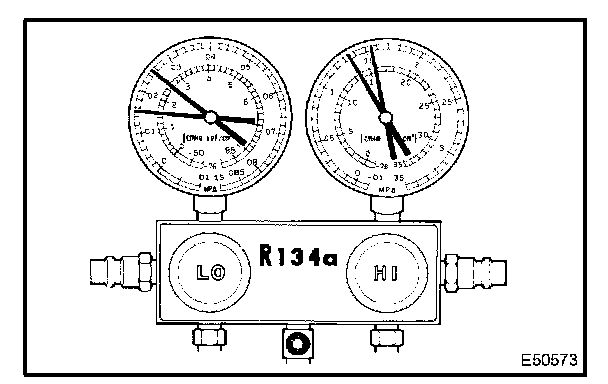
2. CHECK REFRIGERANT PRESSURE WITH MANIFOLD GAUGE SET
a. Use this method to determine the trouble area using a manifold gauge set. Read the manifold gauge pressure when the following test conditions are met:
- Engine has been warmed up.
- All doors are fully open.
- A/C switch is turned ON.
- Engine is running at 1,500 rpm.
- Air inlet mode selector damper is on recirculation.
- Temperature control switch is at MAX. COLD.
- Blower speed control switch is at HI.
- Temperature at the air inlet is 30 to 35°C (86 to 95°F).

1. Check the gauge readings when the refrigerant volume is normal.
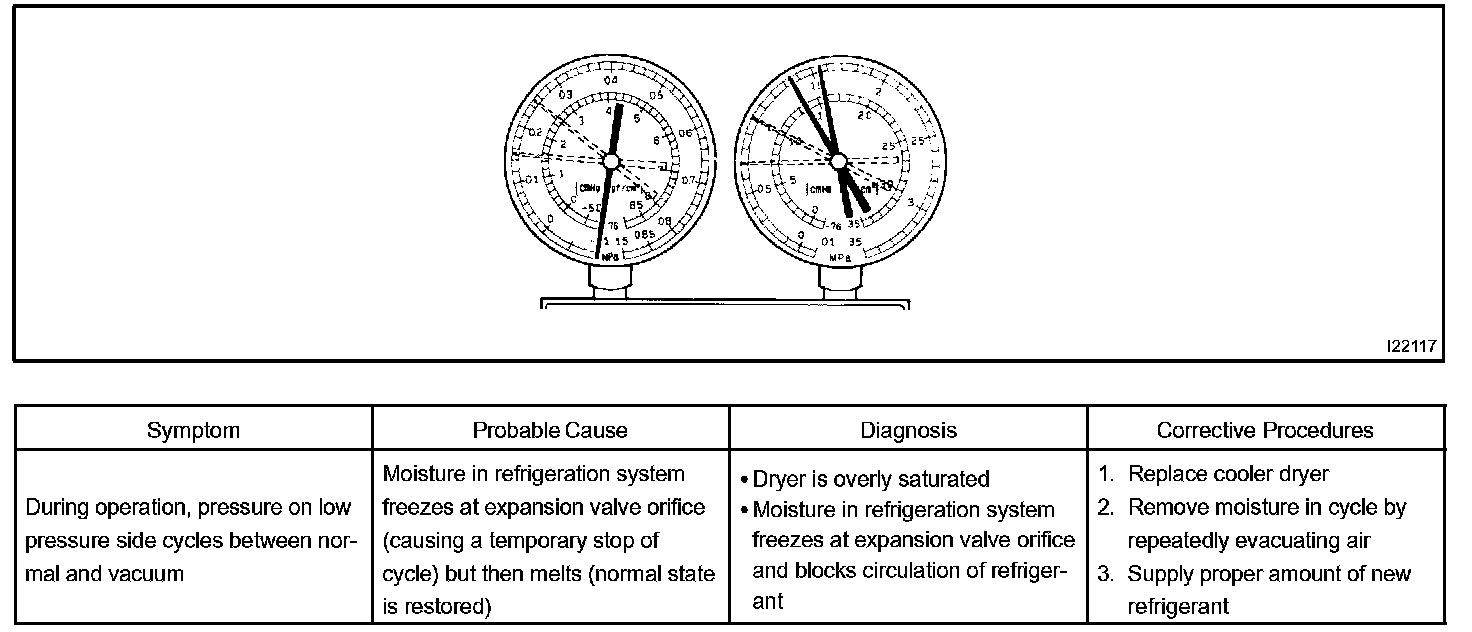
2. The A/C system periodically changes between normal and improper function due to moisture in the refrigeration system.
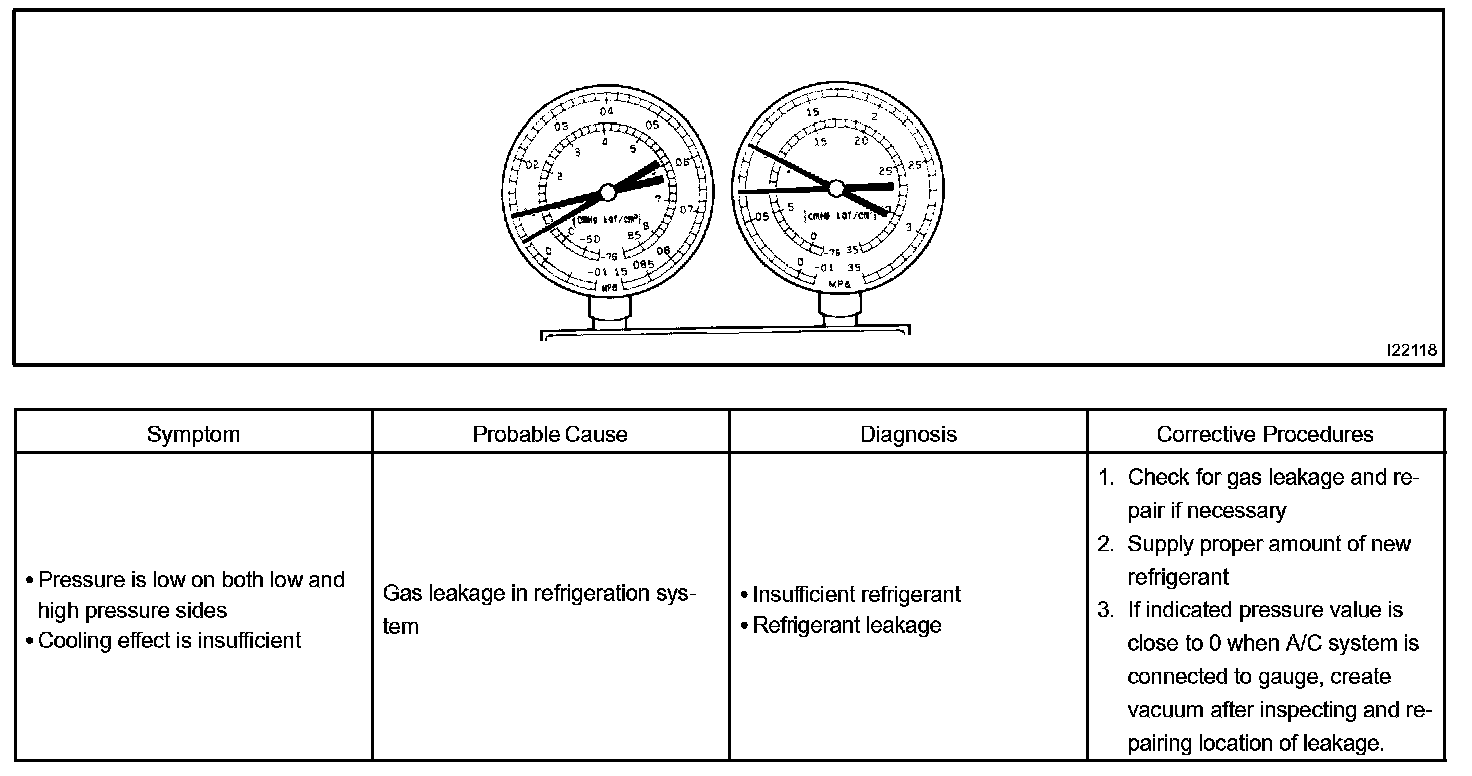
3. The A/C system does not function effectively due to insufficient cooling.
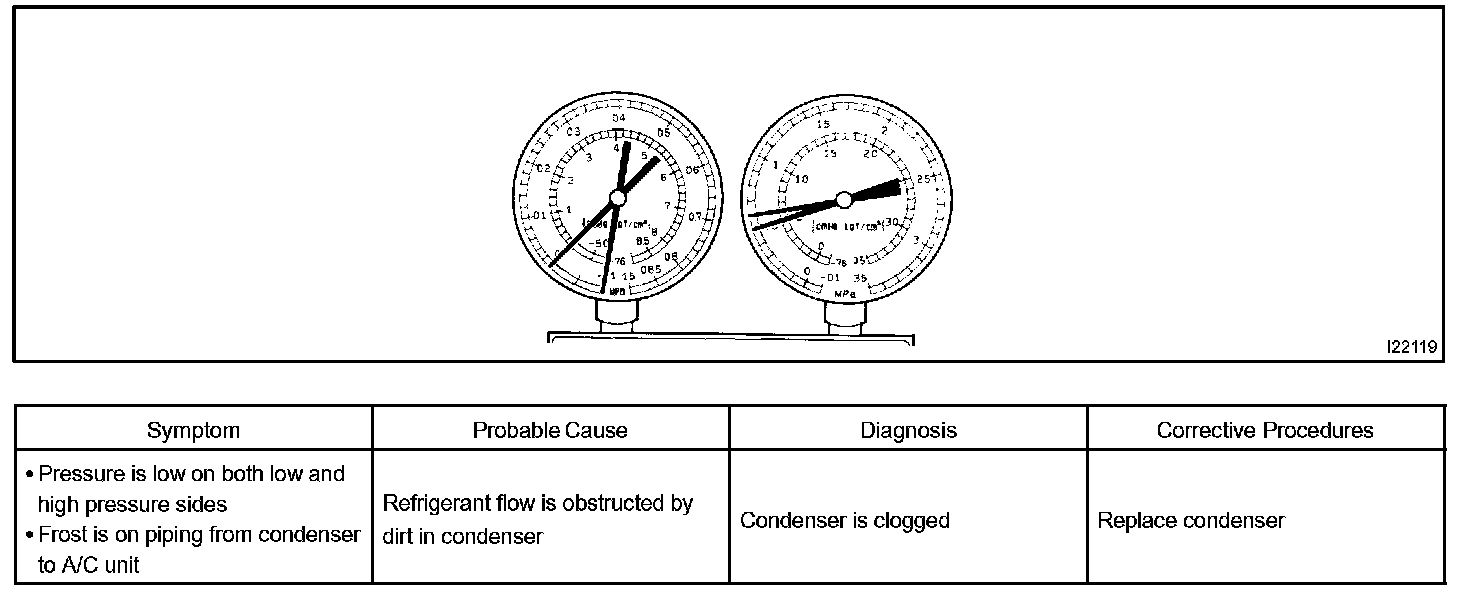
4. The A/C system does not function effectively due to poor circulation of the refrigerant.
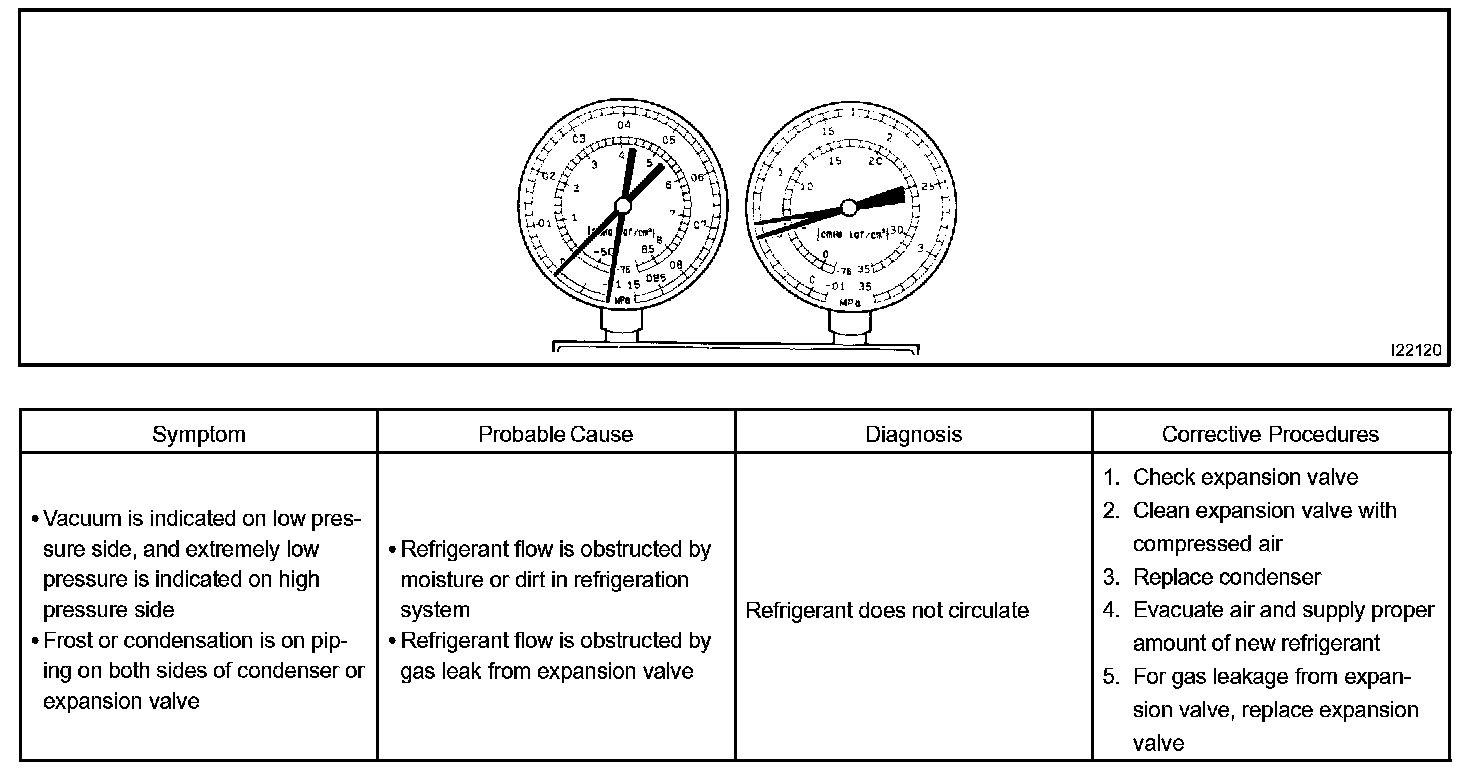
5. The A/C system does not function or functions intermittently because the refrigerant does not circulate.
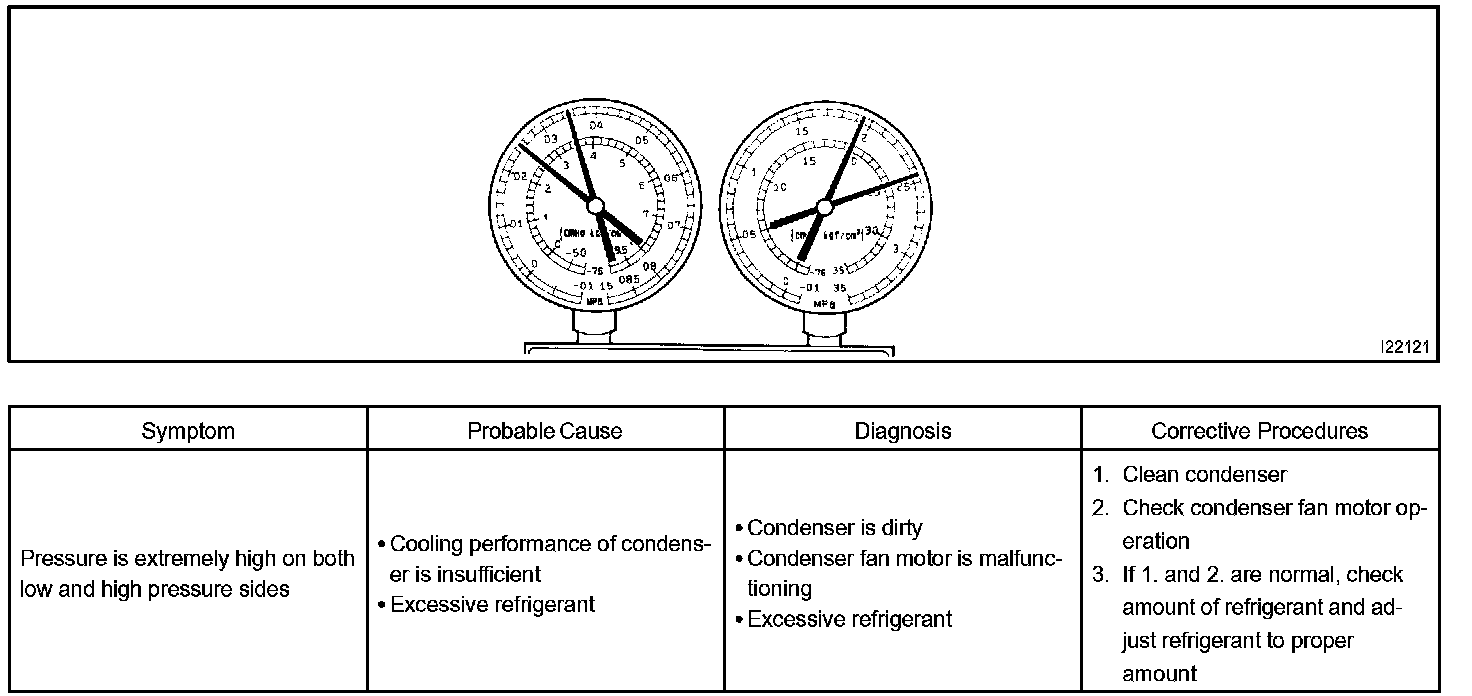
6. The A/C system does not function effectively due to overcharged refrigerant or insufficient cooling of the condenser.
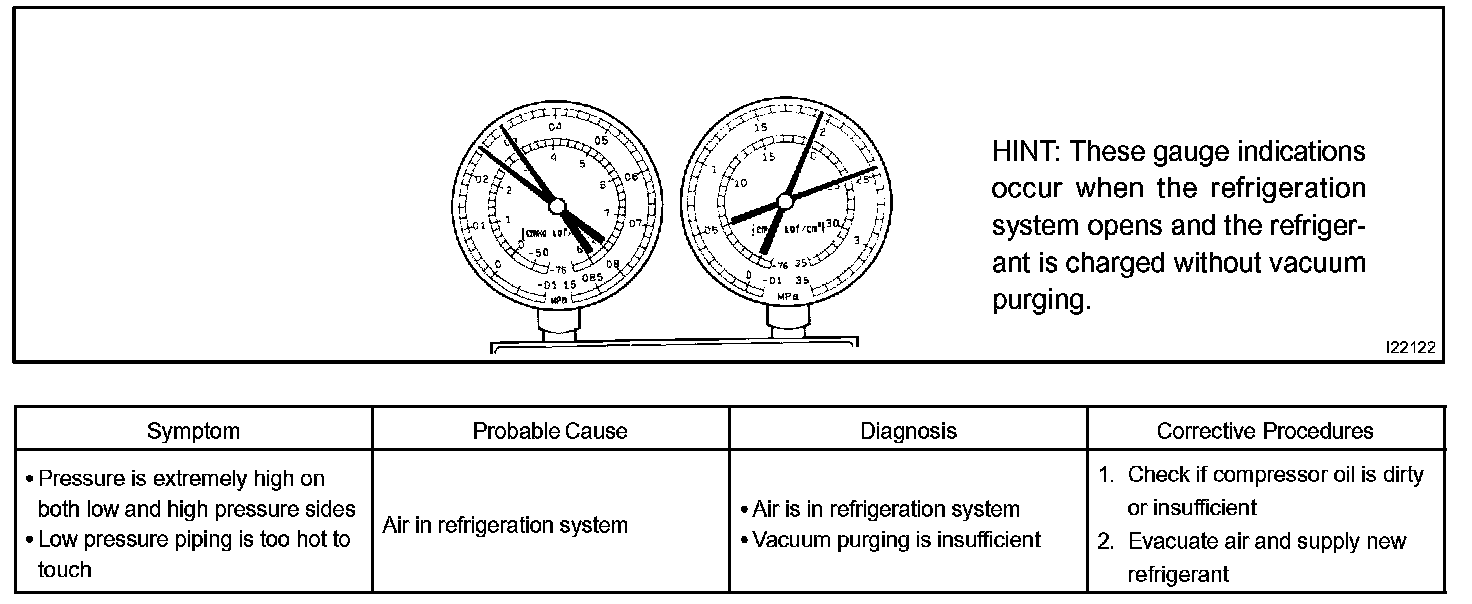
7. The A/C system does not function due to air in the refrigeration system.
CAUTION: The low pressure piping may be very hot and cause serious burns.
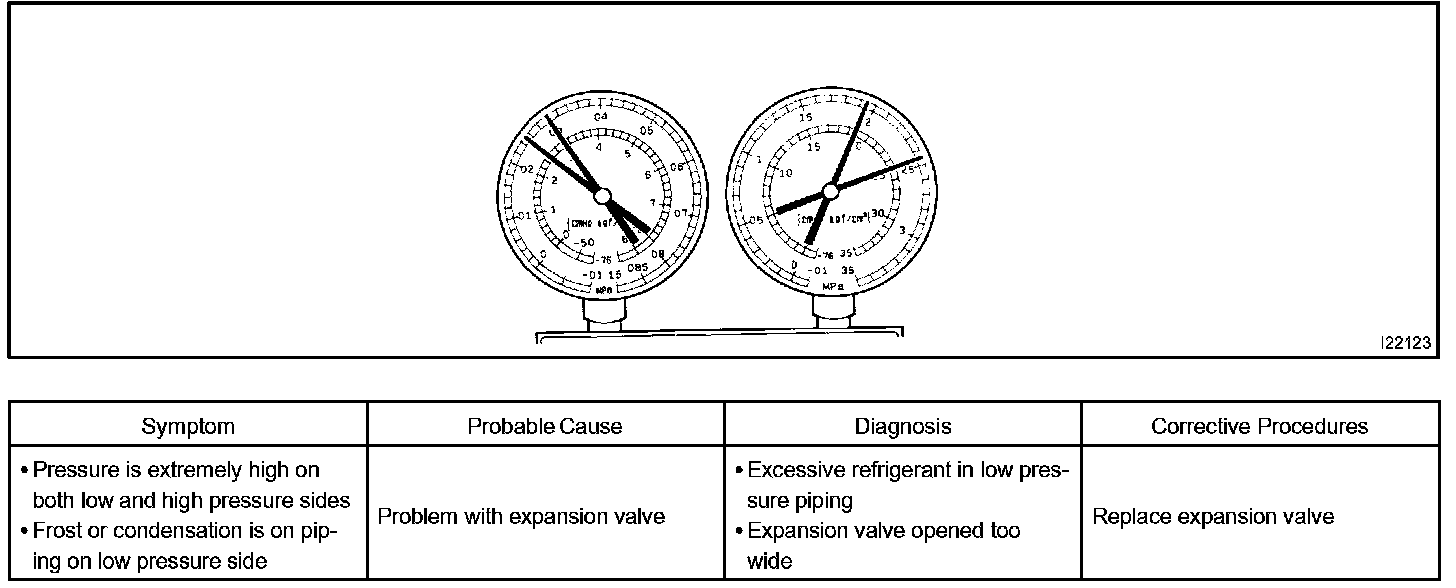
8. The A/C system does not function effectively due to an expansion valve malfunction.
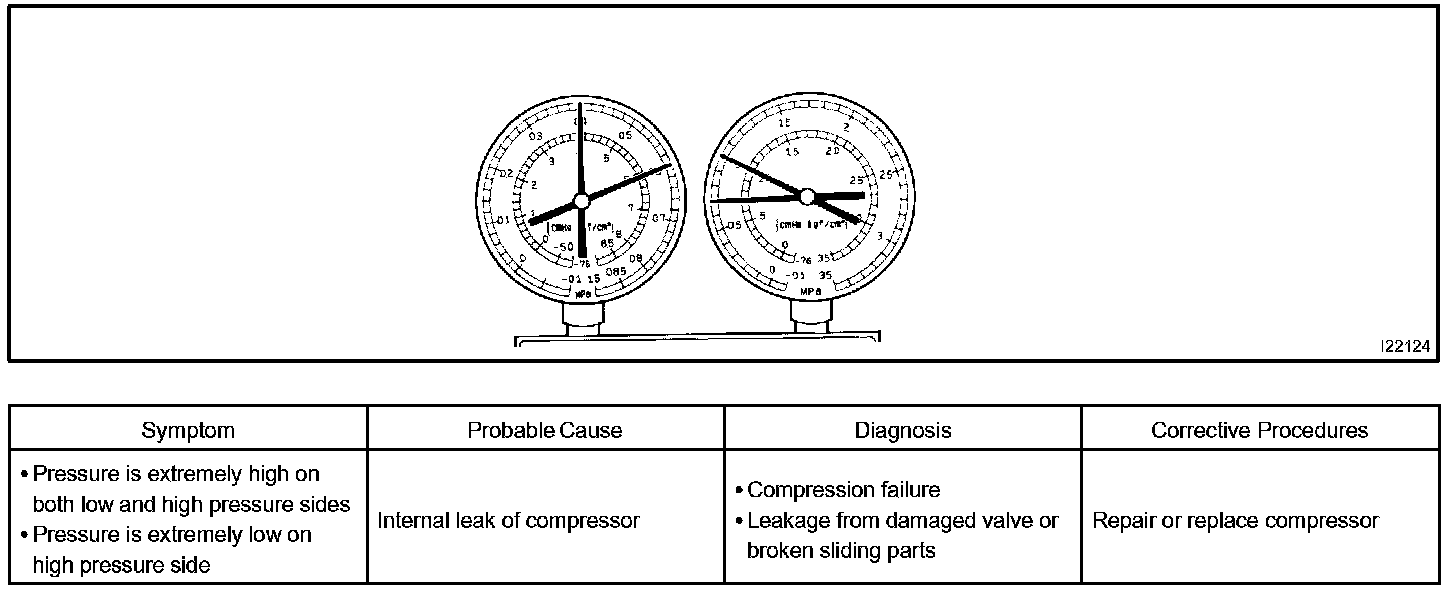
9. The A/C system does not function due to a defective compressor.